How to tell your family you are seeing a counselor, and when not to

Short answer
You do not have to tell anyone you are seeing a counselor. Counseling is private and nothing is shared with your family without your permission. If you do want to tell someone, choose one person who tends to react calmly, say it briefly and without asking for approval, and decide in advance how much detail you are willing to give.
This question comes up more often than almost any other, and usually before the first session rather than after it. People want to know whether they are expected to announce it, whether someone will find out, and what they are supposed to say if they do.
The short version is that this is yours to decide. Counseling is confidential. Nobody at this practice contacts your family, your spouse or your employer, and nothing you say in a session is passed on without your permission. You can read the detail of that on the page about whether counseling is confidential. So the question is not really about privacy. It is about whether you want the people around you to know, and what happens to you if they do.
Do you actually need to tell anyone?
No. There is no stage of counseling that requires an announcement, and quietly getting help is not dishonesty. People keep all sorts of ordinary things to themselves, including physiotherapy appointments and dental work, and nobody calls that hiding.
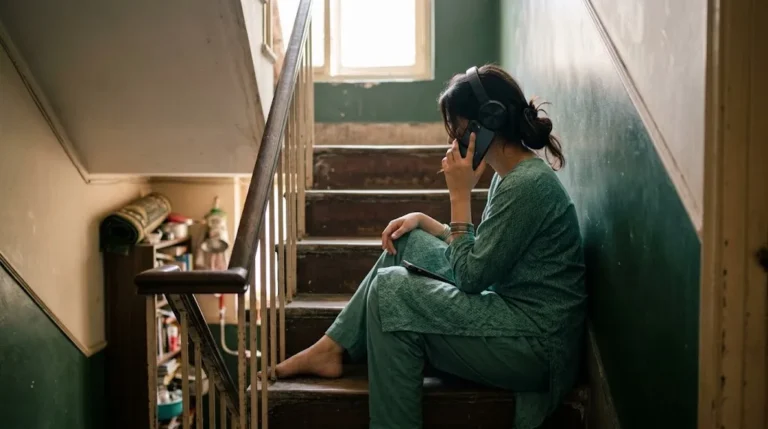
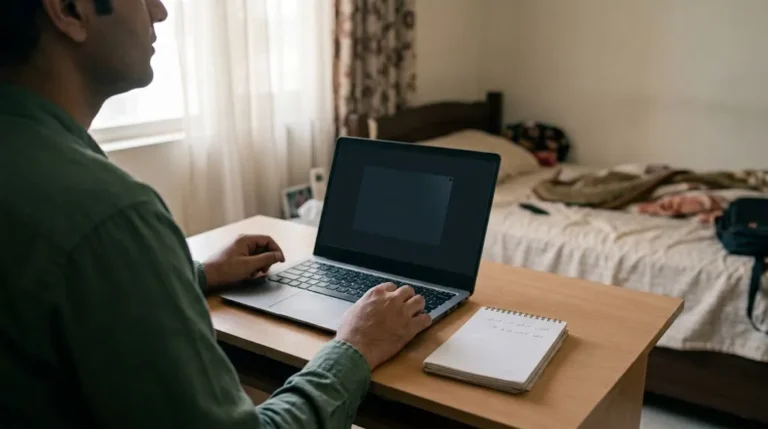
There are two practical situations where telling someone makes life easier rather than harder. The first is if you share a house and need a predictable hour with the door shut; one person knowing you have a call at eight makes that hour much easier to protect. The second is if the thing you are working on directly involves someone in the house, and you expect to make changes they will notice.
Who to tell first
Pick one person, and pick them for their temperament rather than their closeness to you. The sibling who is unbothered by most things is a better first audience than the parent who worries loudly, even if you are closer to the parent. You are not choosing who deserves to know. You are choosing who will make the next ten minutes easy.
A first telling that goes calmly gives you something to stand on. A first telling that turns into a family meeting can put you off the whole idea for a year.
What to actually say
Short works better than prepared. The longer the explanation, the more it sounds like a case that needs approving, and the more openings it leaves for questions you did not want to answer.
- “I have started talking to a counselor. It is helping. I am not going into detail about it.”
- “I see someone once a week to talk things through. It is a normal thing to do and I would rather not make it a discussion.”
- “I am getting some help with the stress. I will tell you if there is anything you need to know.”
Notice what is missing from all three: a justification. You are informing, not applying. The moment the sentence becomes “I thought maybe I should, because things have been quite bad, and I know it sounds dramatic but…” you have handed over the decision.
The questions that usually follow, and what they mean
“Is something wrong with you?”
Almost always fear rather than accusation. The person asking has heard the word “counselor” and jumped to something serious. “No. It is the same reason anyone talks to anyone. It helps to think out loud with someone who is not involved” usually settles it.
“Can you not talk to me instead?”
This one is hurt, and it is worth answering kindly, because the person is telling you they want to be useful. “I do talk to you. This is different. He is not part of any of it, which is the whole point.”
“What do you even say to him?”
Curiosity, and the easiest to deflect. “Whatever is on my mind that week” is a complete answer.
“Who is paying for this?”
If you are paying yourself, say so and stop there. If money is genuinely the obstacle, the fees page lists everything, and a ten-minute introductory call costs nothing, so you can find out whether it is worth it before spending anything.
When telling is a bad idea
There are households where disclosing this would create a problem larger than the one you came in with. If you have good reason to believe that telling a particular person would lead to pressure, surveillance, or the decision being taken out of your hands, do not tell them. That is not cowardice. It is an accurate reading of your own situation, and you are the only person who has that reading.
If that describes your house, text chat counseling exists partly for this reason. It leaves no audio, needs no private hour, and looks like any other conversation on your phone.
If you are telling a spouse
This is its own situation, because a spouse is often part of what you want to talk about. Two things help. Say it before you start rather than after, so it does not arrive as a revelation. And separate the fact from the content: “I am going to talk to someone” is a different conversation from “I am going to talk to someone about us”, and you do not have to have the second one on the same evening.
If what you actually want is for both of you to go, that is a different service and it starts differently. Marriage counseling is designed for two people in the room, and attending one session alone first is common and entirely reasonable.
The thing most people find afterwards
The reaction is usually smaller than the rehearsal. People imagine a scene and get a shrug. That does not always happen, and this article is not going to promise it. But the anticipation is reliably worse than the event, and a great many people spend months deciding how to say something that takes forty seconds.
Common questions
Will my family be told that I am in counseling?
No. Sessions are confidential and nothing is shared with your family, your spouse or your employer without your permission. The only exceptions are the narrow legal ones that apply to any practitioner, such as a serious and immediate risk to life, and these are explained on the confidentiality page.
Do I have to give my real name to book a session?
You need a name and a way to be contacted so the session can be arranged, but you are not asked to prove your identity, and you can ask that no written record be kept beyond what is needed to run the appointment.
What if someone in my house sees the appointment on my phone?
Sessions can be held over WhatsApp, Google Meet or Zoom, and none of these need to show anything on a shared screen. If the risk of being seen is the real obstacle, text chat counseling leaves no call log and no audio at all.
My parents think counseling is only for serious mental illness. How do I explain it?
Most people in counseling are not unwell in any medical sense. They are dealing with stress, a difficult marriage, a decision they cannot make, or a loss. Framing it as talking something through with someone outside the family is usually both accurate and easier to hear.
Can I attend without my spouse knowing?
Yes. Individual counseling is yours, and there is no requirement to tell a spouse. Whether it is wise depends on your situation, and it is a reasonable thing to discuss in a session.
Is a ten-minute introductory call really free?
Yes. It is free and there is no obligation after it. It exists so you can find out whether this is likely to help before you pay for anything.
Ten minutes is enough to find out whether this helps.
What the research says
- Professional ethics codes for psychologists treat confidentiality as a primary obligation, with limits that must be explained to you, such as a serious risk to your life or someone else's. [1]
- Most people living with a mental health condition do not receive effective care. Only about one in three people with depression gets formal mental health care. [2]
Sources
- American Psychological Association. Ethical Principles of Psychologists and Code of Conduct, Standard 4: Privacy and Confidentiality. www.apa.org
- World Health Organization. Mental disorders, fact sheet (updated 11 September 2026). www.who.int
Last reviewed 29 September 2026. General information, not a diagnosis. In an emergency call Rescue 1122 or Umang’s 24-hour helpline on 0311 7786264. All helplines in Pakistan.