Dreading weddings and gatherings when everything happens at them
Short answer
Social anxiety is a fear of being judged that makes gatherings feel like an examination. It grows through avoidance: every event you skip brings short-term relief and makes the next one harder. It is treated by reducing avoidance gradually and by changing where your attention goes while you are there.
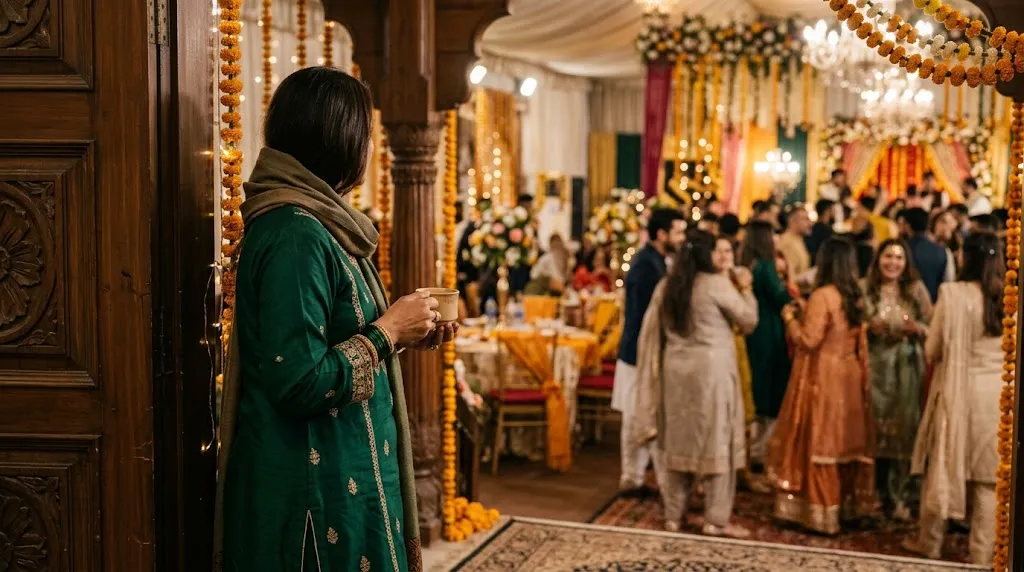
In many countries a person with social anxiety can arrange a fairly quiet life. Here that is much harder. There is a wedding most months, often four days of it. There are Eid visits that cannot be declined. There is a cousin’s engagement, a milad, a funeral, a birth, a farewell for someone leaving for Canada. Attendance is not optional and absence is noticed and discussed.
So social anxiety, which elsewhere might be manageable through arrangement, becomes a recurring weekly problem with a social cost attached to every avoidance.
What it actually is
Not shyness, and not a dislike of people. It is a fear of being evaluated and found wanting, and it runs on a specific and exhausting mechanism: while you are in the room, a large part of your attention is turned inward, monitoring how you are coming across.
That is the part that does the damage. You are watching yourself talk, checking your own face, reviewing what you said four sentences ago. Which means you are not really in the conversation, which makes you awkward, which confirms the fear. The monitoring produces the problem it is watching for.
The local shape of it
- Finding out who else is invited before deciding whether to go.
- Arriving deliberately late so the room is already full and nobody turns to look.
- Staying beside one trusted person the entire evening and feeling stranded when they move.
- The buffet, which requires standing, holding a plate, and being visible while eating.
- Photographs, and the specific dread of the group photo.
- Rehearsing answers to “so what are you doing these days”, “when are you getting married”, “any good news”.
- Getting sick on the morning of the event, genuinely. The body cooperates with the escape.
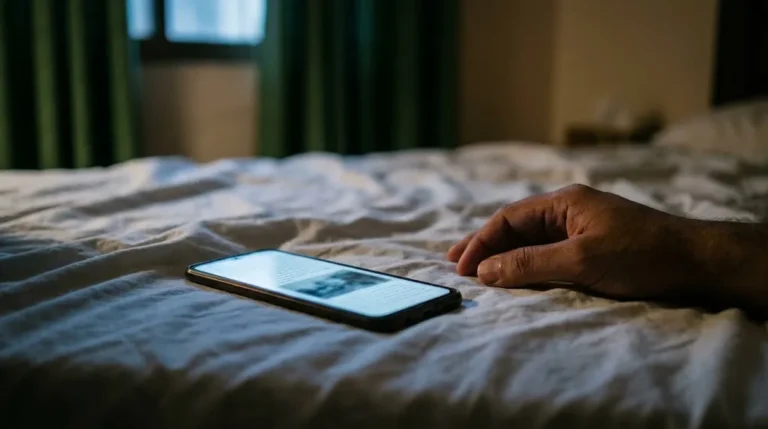
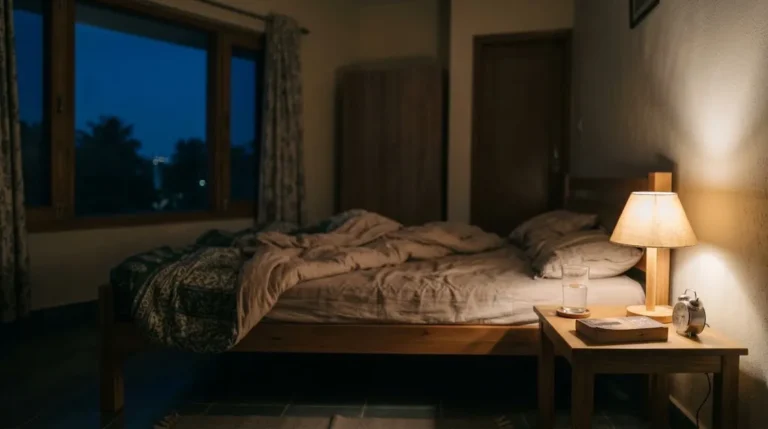
- Replaying the evening at two in the morning, focusing on one sentence you said wrong.
That last one has a name worth knowing: the post-mortem. It is a review that only ever finds faults, because you are searching for them. It does more damage than the event, and it is directly interruptible.
Why avoiding makes it worse
This is the central mechanism and it is worth being clear about. When you skip an event, you feel immediate and enormous relief. That relief is a reward, so skipping becomes more likely next time.
And because you did not go, you never got the evidence that you would have coped. The fear is left intact and untested, so it grows. Every avoided event makes the next one larger.
Over a few years, people go from disliking large weddings to declining a dinner with four relatives. It happens slowly and each step is reasonable.
What helps, in order
Turn your attention outward
The single most effective thing, and it can be practised at the next event. Give yourself a task that requires attending to other people: find out three concrete things about someone, for instance where they live now, what they do, and how they know the family. You cannot monitor yourself and be genuinely curious about someone else at the same time. The attention has to be somewhere.
Have answers ready for the three questions
You already know what will be asked. Prepare one short, flat, complete answer for each, one you are willing to repeat twelve times. Rehearsed brevity is not dishonest. It removes the part of the evening you spend dreading a question.
Go, and leave early
An hour attended beats an evening skipped, by a wide margin, because it gives you the evidence avoidance denies you. Decide the leaving time before you arrive and hold it. Going with an exit is not cheating; it is how the pattern starts reversing.
Stop the post-mortem deliberately
When you catch yourself at midnight reviewing a sentence, say “I am doing the review again” and get up. Change room, drink water, put something on. The review feels like useful self-improvement and it is not; it is the thing that carries the anxiety into the next event.
Do not drink your way through it
Worth saying for the people it applies to. Anything that makes the room tolerable in the moment teaches you that you cannot manage the room without it.
What does not help
Being told to relax. Being told everyone is too busy to notice you, which is true and changes nothing. And being pushed into a large event by well-meaning family, which is flooding rather than graded exposure, and reliably sets people backwards.
When it is worth getting help
If you are declining things you want to go to. If work is affected, particularly presentations or meetings. If you have started avoiding phone calls as well as rooms. If the dread now starts days beforehand rather than on the day.
Anxiety counseling deals with this specifically, and social anxiety is one of the most treatable patterns there is, partly because progress is measurable: you can count what you attended.
If the idea of a video call is itself difficult, sessions can be audio only, and text chat counseling is written rather than spoken. Starting somewhere you can tolerate is not a compromise, it is the correct first step.
Common questions
Is social anxiety just shyness?
No. Shyness is a temperament and is not necessarily distressing. Social anxiety is a fear of being judged that causes real distress and leads to avoidance, and that avoidance steadily narrows a person’s life.
Why do I feel fine with close family but not at gatherings?
Because the fear is about evaluation, not about people. With those who already know you there is little left to assess. A room of acquaintances and distant relatives is where judgement feels live.
Should I force myself to attend every event?
No. Being pushed into the largest possible event usually sets people back. Graded steps work: shorter attendance at smaller gatherings first, with a decided leaving time, building up as each one becomes manageable.
Can social anxiety be treated without medication?
Yes. It responds well to counseling, particularly work on attention and on reducing avoidance in steps. Medication is sometimes useful in severe cases and would be prescribed by a psychiatrist, not a psychologist.
Why do I replay conversations for hours afterwards?
This is called post-event processing, and it is a standard feature of social anxiety. It feels like useful reflection but only ever finds faults, because that is what it is searching for. Interrupting it deliberately is part of the treatment.
Can I have counseling without being on camera?
Yes. Sessions can be audio only on WhatsApp, Google Meet or Zoom, and text chat counseling is entirely written. Starting in the format you can tolerate is the right approach.
Ten minutes is enough to find out whether this helps.
What the research says
- Anxiety disorders are the most common mental health conditions worldwide. The World Health Organization estimates 470 million people had one in 2023. [1]
- The WHO describes psychological support, mainly talking with a trained professional, as an essential treatment for anxiety. [1]
Sources
- World Health Organization. Anxiety disorders, fact sheet (updated 15 September 2026). www.who.int
Last reviewed 29 September 2026. General information, not a diagnosis. In an emergency call Rescue 1122 or Umang’s 24-hour helpline on 0311 7786264. All helplines in Pakistan.