Exam anxiety: when you sit down and cannot open the book
Short answer
Being unable to start studying despite wanting to is usually anxiety rather than laziness. Opening the book makes the gap between what you know and what you need to know visible, so avoiding it removes the distress temporarily. The way out is to reduce the first step until it is too small to trigger avoidance.
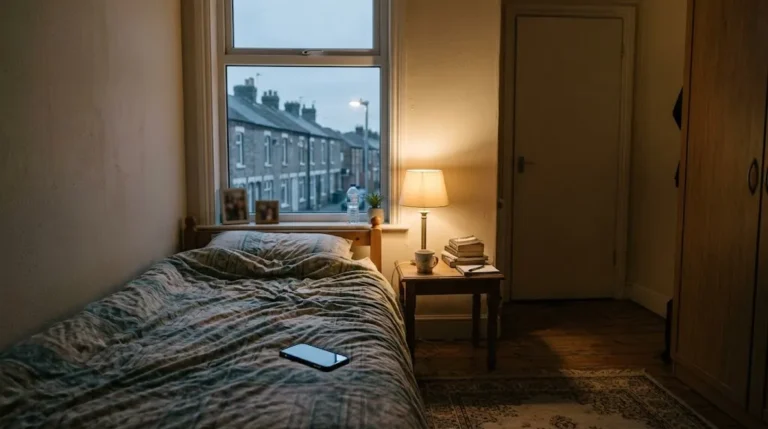
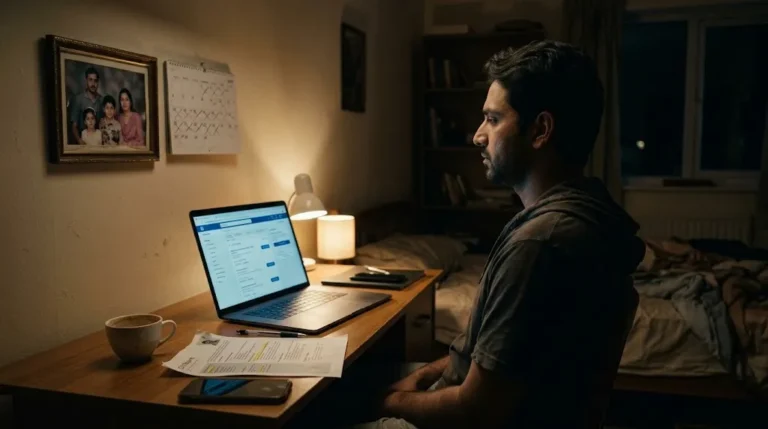
Two months before the exams. You sit down at eight with every intention. At eleven you have reorganised your desk, made a timetable, watched something, and not opened anything. You go to bed feeling sick about it and repeat the whole thing tomorrow.
Everyone in your house has concluded you are wasting your life. You have concluded the same. It is worth knowing that this specific pattern, wanting to study and being unable to begin, is one of the most recognisable presentations of anxiety there is.
Why the book will not open
Because opening it makes the situation visible.
While the book is closed, the gap between what you know and what you need to know is theoretical. The moment you open it, you see the chapters you have not touched, and the feeling that arrives is genuinely unpleasant.
Closing it removes the feeling immediately. That relief is a reward, and rewarded behaviour repeats. This is not a character defect, it is a learning mechanism working exactly as it should on the wrong target.
Then it compounds. Each avoided day makes the gap larger, which makes opening the book worse, which makes avoiding more likely. That is how a student goes from slightly behind in October to unable to function in December.
The things that feel like studying and are not
Worth naming, because they consume enormous amounts of time and provide the comfort of effort:
- Making timetables. Colour-coded, detailed, revised weekly, never followed.
- Rewriting notes neatly. Copying is close to the least effective revision method there is, and it feels productive because your hand is moving.
- Reading and highlighting. Recognition is not recall, and highlighting produces a comfortable sense of familiarity that collapses in the exam hall.
- Waiting for a clean start. Monday. The first of the month. After this week. The clean start never comes and the waiting is the avoidance.
- Studying with friends who are also avoiding.
What actually works
Make the first step too small to avoid
Not “study chemistry”. Not even “one chapter”. Open the book and read one page. That is the whole commitment, and you are genuinely allowed to stop afterwards.
Most of the difficulty is in starting rather than continuing. A task small enough to not trigger avoidance usually produces twenty or thirty minutes once begun, and the twenty minutes were never available while the target was the whole subject.
Work in fixed blocks with the phone elsewhere
Twenty-five minutes of work, five minutes off, and the phone in another room, not face down on the desk. The mere presence of a phone within reach measurably reduces concentration even when it is not touched.
Test yourself instead of reading
Close the book and write what you remember. It is uncomfortable, it is much harder than reading, and it is by a wide margin the most effective revision method available. The discomfort is the mechanism working.
Start with the subject you are most afraid of
The avoided subject is generating most of the dread, and it grows while it is being avoided. Fifteen minutes on it first thing changes the whole day, because the worst item is no longer waiting.
Have a fixed stopping time
Students in exam season often study in a permanently guilty state, never properly working and never properly resting. A stated end to the day makes the working hours better and makes rest possible without guilt.
The night before, and the hall
Sleep is worth more than the last three hours of cramming, and this is not a slogan. Memory consolidates during sleep, so the hours spent awake at three in the morning are taking away from what you already learned.
In the hall, if your mind goes blank: put the pen down, breathe out slowly for a count of seven, and start with any question you can answer, regardless of order. Blankness under panic is a temporary physiological state, not a loss of knowledge, and it passes within a couple of minutes if you stop fighting it.
For parents reading this
The student who is avoiding is not relaxed. They are in more distress than the one working steadily, and pressure adds to the thing causing the avoidance. “Have you studied” asked eight times a day produces silence rather than studying.
Asking what specifically is hard, and helping to make the first step smaller, does more than any amount of warning about the future.
When to get help
If this has gone on for weeks. If there is vomiting, or panic attacks, or an inability to sleep at all. If the exams have started to feel like the only thing that determines whether your life is worth anything. If there is any thought of not being here to face the results.
That last one is urgent. Tell an adult now, or contact emergency services.
Counseling for students and young adults works on exactly this pattern, and sessions can be arranged around class timings. Anxiety counseling covers the panic side of it. A free ten-minute call is enough to explain what is happening.
Common questions
Why can I not start studying even when I want to?
Because opening the book makes the gap between what you know and what you need to know visible, and avoiding it removes that distress immediately. The relief rewards the avoidance, so it repeats. It is an anxiety pattern rather than a lack of will.
Is exam anxiety the same as being lazy?
No. A student avoiding work in exam season is usually in considerably more distress than one working steadily. Laziness is comfortable; this is not.
What is the fastest way to start studying again?
Reduce the first step until it is too small to avoid. One page, with genuine permission to stop afterwards. Starting is the hard part, and once started most people continue for far longer than the commitment they made.
Does rewriting notes help?
Very little, relative to the time it takes. Testing yourself from memory with the book closed is substantially more effective, even though it feels harder and less productive.
Should I stay up all night before an exam?
No. Memory consolidates during sleep, so a night spent cramming usually costs more than it adds. Sleep is worth more than the final few hours of revision.
How can parents help a student who is avoiding studying?
By asking what specifically feels hard and helping make the first step smaller, rather than repeating reminders. Pressure adds to the anxiety that is causing the avoidance in the first place.
Ten minutes is enough to find out whether this helps.
What the research says
- One in seven young people aged 10 to 19 worldwide experiences a mental health condition. [1]
- The WHO describes psychological support, mainly talking with a trained professional, as an essential treatment for anxiety. [2]
Sources
- World Health Organization. Mental health of adolescents, fact sheet (updated 1 September 2025). www.who.int
- World Health Organization. Anxiety disorders, fact sheet (updated 15 September 2026). www.who.int
Last reviewed 29 September 2026. General information, not a diagnosis. In an emergency call Rescue 1122 or Umang’s 24-hour helpline on 0311 7786264. All helplines in Pakistan.