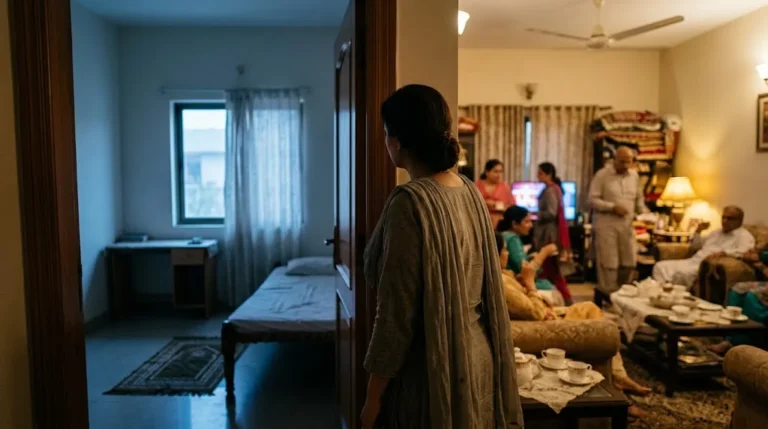
Caught between your mother and your wife
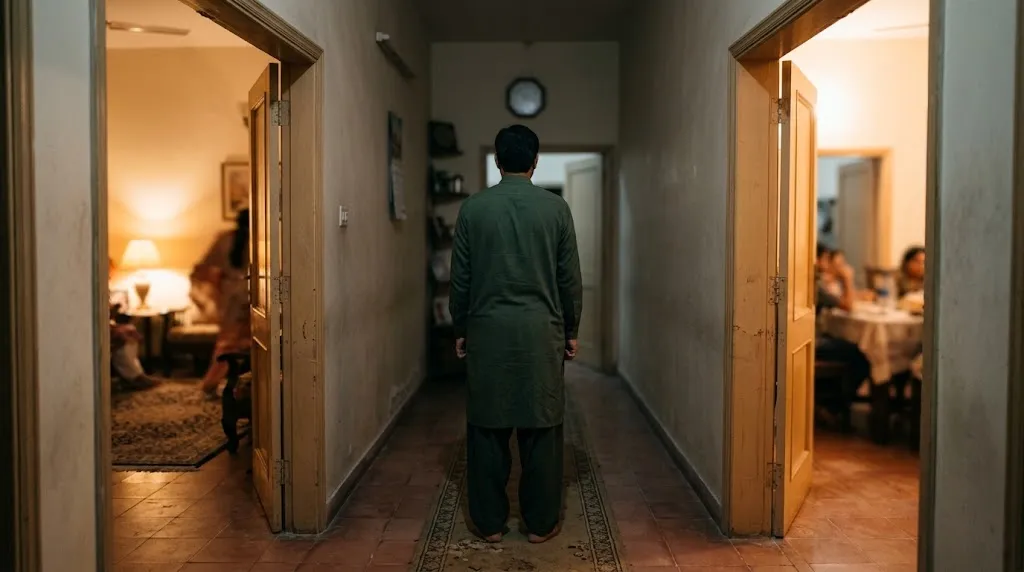
Short answer
Staying neutral between a mother and a wife does not keep the peace; it leaves both women feeling unsupported and makes the conflict permanent. What resolves it is not choosing a side but taking clear positions on specific issues, and handling your own mother directly rather than expecting your wife to manage her.
This article is addressed to the man in the middle, because he is the person in the house least likely to be offered any help and most likely to be told the situation is his fault.
The usual position: your mother complains about your wife. Your wife complains about your mother. Each expects you to agree. You agree with whoever is in the room, avoid the house when you can, and have concluded that anything you say makes it worse.
Why neutrality fails
Neutrality feels like fairness. It is experienced by both women as abandonment.
Your wife hears: he will not stand up for me, so I am alone in a house full of his family. Your mother hears: he will not stand up for me, after everything, so he has been taken from me.
Both draw the same conclusion, which is that you are not on their side. And because nothing is ever settled, every issue stays live and returns next month with the previous month’s grievances attached. Avoidance does not reduce the conflict. It removes the only mechanism by which it could end.
What taking a position actually means
It does not mean choosing between them in general, which is what everyone fears and what nobody is actually asking for.
It means having a view on specific things, saying it to both, and not saying different things in different rooms.
Concretely: whether your wife has to ask permission to visit her parents. Whether your mother can enter your room without knocking. Who decides how your children are disciplined. Whether your salary is discussed at the dinner table. These are answerable questions. The general question of who is more important is not, and nobody benefits from attempting it.
The part most men get wrong
You must handle your own mother. Not your wife.
This is the single most common structural error in these households. A wife raising an issue with her mother-in-law is a daughter-in-law overstepping, whatever the merits, and it will cost her far more than it costs you. The same sentence from a son is a son talking to his mother. It lands completely differently.
The same applies in the other direction. Your mother’s complaints about your wife come to you, and you deal with them, rather than passing them on as a message.
Most men avoid this because their mother’s disappointment is genuinely hard to face. That is understandable, and the avoidance transfers the whole cost onto someone with less standing in the house.
Saying something to your mother without a rupture
Three things make it survivable:
- Separate the relationship from the issue. Begin with what is not in question. “Nothing changes between us. On this one thing, we are going to do it differently.”
- Be specific and small. One matter, not a review of the last four years. General conversations about respect go badly and settle nothing.
- Accept that she may be hurt, and do it anyway. Her being upset is not evidence that you were wrong. This is the hardest part, and the whole thing turns on it.
And to your wife
The thing she most needs is usually not victory. It is to know where you stand and that you will say it. A great many wives in this situation say the same thing: I could manage his mother if I knew he was with me.
What you can honestly offer: you will not pretend you did not hear something. You will say your view to your mother rather than only to her. You will not ask her to be the one to raise it. You cannot promise your mother will change.
That last one matters. Promising an outcome you do not control is how you end up trusted even less.
What makes it worse
- Repeating what each said about the other. It feels like honesty and it guarantees permanent hostility.
- Waiting for them to sort it out. They will not, and every month it hardens.
- Spending more time away. It solves your evening and leaves your wife in the house with the situation you left.
- Telling your wife to be patient indefinitely. Patience with a specific end is reasonable. Patience as a permanent policy is asking her to accept it forever.
The thing worth knowing about your mother
Much of this comes from loss rather than malice. She ran this house, made every decision in it, and was the woman you consulted. Now there is another adult woman here and her role is unclear.
That is not an excuse for unkindness and it does point at what sometimes helps: a genuine and specific place for her that is not authority over your wife. Something that is hers, consulted about, valued. Many mothers-in-law become easier when they stop feeling replaced.
Getting help
In-laws and joint family counseling is built for this and the man in the middle is a regular client, not an afterthought.
If what you actually need is to work out what your own position is before saying it to anyone, individual counseling is the right place, and that is a legitimate and common reason to book. If your wife wants both of you to attend, marriage counseling covers what happens between the two of you when the pressure arrives.
Common questions
How do I stay neutral between my wife and my mother?
You generally cannot, and attempting it is usually what makes the conflict permanent. Both women experience neutrality as a refusal to support them. Taking clear positions on specific issues works better than trying to avoid all of them.
Should my wife talk to my mother directly about problems?
Usually not. The same words from a daughter-in-law carry a very different cost than from a son. Handling your own mother yourself is the single most useful change most men in this position can make.
My mother gets upset whenever I disagree with her. What do I do?
Distress is not proof that you were wrong. Separating the relationship from the issue, keeping the matter specific and small, and accepting that she may be hurt is what makes it possible to say anything at all.
Is it normal for mothers-in-law and daughters-in-law to clash?
It is extremely common in joint households and it is often driven by an unclear division of authority rather than by dislike. A mother who has run a house for thirty years frequently experiences the arrival of another adult woman as displacement.
Can counseling help if only I attend?
Yes. Your position in the middle is the part of this you directly control, and clarifying it changes the whole arrangement. Many men attend alone to work out what their position actually is before stating it.
What if my wife wants to move out and my mother will not accept it?
That is a real decision with real consequences on both sides and it is worth thinking through properly rather than making it during an argument. It is a common subject in sessions and there is rarely a costless answer, only a considered one.
Ten minutes is enough to find out whether this helps.
What the research says
- A review of a decade of research found couple therapy helped around 70% of couples who received it, with results comparable to individual therapy. [1]
Sources
- Lebow JL, Chambers AL, Christensen A, Johnson SM. Research on the treatment of couple distress. Journal of Marital and Family Therapy, 2012. europepmc.org
Last reviewed 29 September 2026. General information, not a diagnosis. In an emergency call Rescue 1122 or Umang’s 24-hour helpline on 0311 7786264. All helplines in Pakistan.