The loneliness nobody warns you about after moving abroad
Short answer
Loneliness after moving abroad usually peaks after the first year rather than on arrival, once the novelty ends and it becomes clear that the new place has not produced close relationships. It is intensified by having to report success to family at home, which makes describing the difficulty feel like ingratitude.
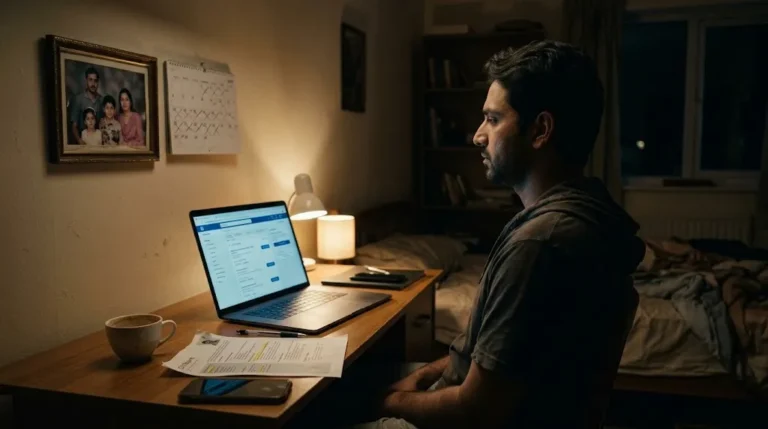
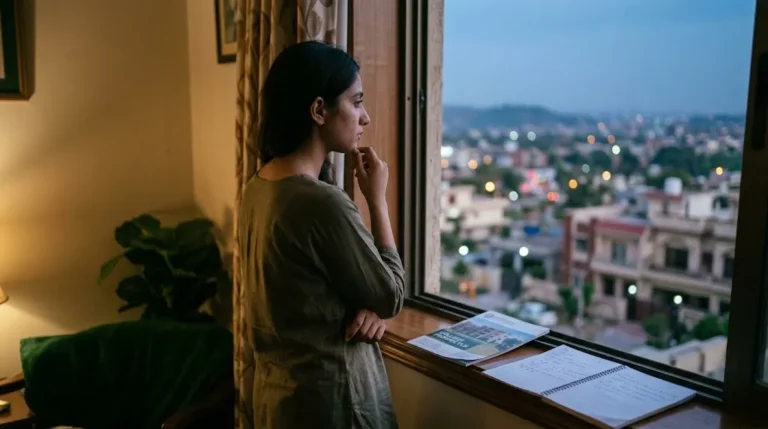
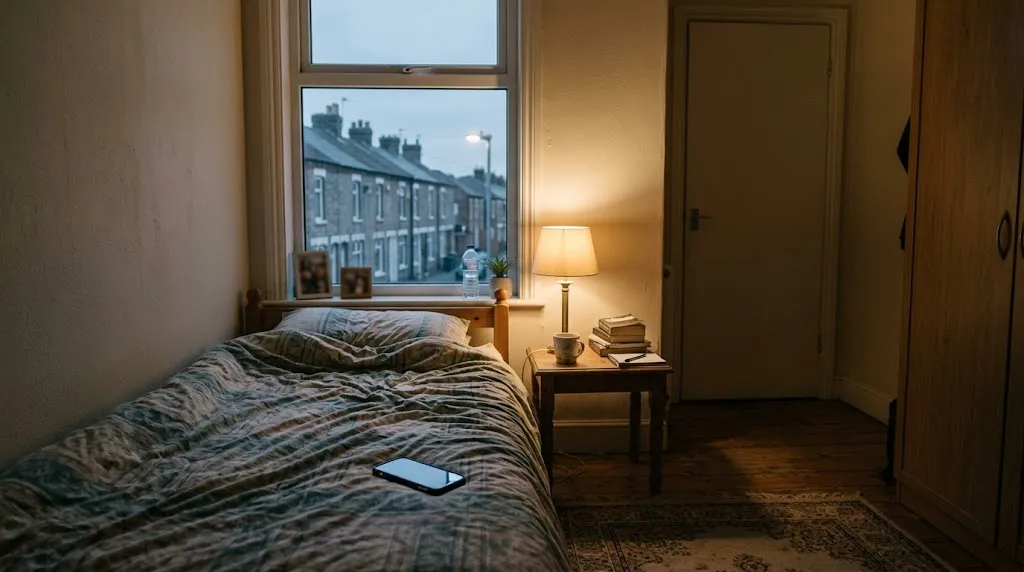
Everyone prepared you for the paperwork. Somebody told you about the weather and the cost of things. Nobody mentioned that you would be sitting in a small room on a Sunday afternoon having spoken to no one in two days, in a country you worked for years to reach.
Why the second year is often worse
The first months have momentum. Everything is new, there is a great deal to arrange, and the effort of setting up a life occupies you. You are also still fresh in everyone’s mind at home, so the calls are frequent.
Then the arrangements finish. The novelty wears off. The calls home reduce, because life there continued and you are no longer news. And it becomes apparent that the people you see daily are colleagues and classmates rather than friends, which is a distinction that only becomes obvious when you need someone at ten on a Tuesday night.
The part that makes it hard to talk about
You are supposed to be succeeding. A great deal was spent, a great deal was sacrificed, and possibly several people are depending on what you send back.
So when your mother asks how it is going, you say it is good, because the true answer would worry her and she cannot do anything from there anyway. And after a year of that, you have an entire life nobody at home knows anything about, which is its own kind of distance.
Meanwhile people at home have concluded you have done well and have stopped asking, and the sympathy available to you is close to zero. Complaining about loneliness while holding a visa half the country wants feels indefensible, so it stays unsaid.
The specific things that hurt
- Illness. Being unwell alone in a rented room is the moment most people describe as the worst of it.
- Eid and Ramzan. Iftar alone, or with a group that does not feel like home. The contrast with what it used to be is the hardest part.
- Deaths. Being unable to attend a funeral, and grieving without anyone around you who knew the person. This is the single heaviest thing overseas Pakistanis describe.
- Friendship not working the way it used to. Friendships in many Western countries are scheduled rather than dropped-in-on, and a person used to people simply arriving can find the diary-based version cold, even when it is warmly meant.
- The accumulation of small unbelonging. Not understanding references, not getting jokes, saying things that land oddly. Individually trivial and exhausting in volume.
- Family calls becoming a performance. Where you report and reassure rather than talk.
What helps
One repeating thing with the same people
This matters more than the number of people you meet. Closeness comes from repetition, not from events. A weekly class, a five-a-side game, a Friday jamaat, the same volunteer shift. The same faces, every week, without needing to organise anything.
Tell one person at home the truth
Not your parents necessarily, if protecting them is the reason you are performing. A sibling, a cousin, a friend. One person who gets the accurate version stops the whole life from becoming a report.
Do not let the good version of home take over
Homesickness edits. It remembers the food and the ease and quietly removes the traffic, the interference, the reasons you left. Comparing an idealised memory to an actual Tuesday is a contest the present cannot win.
Be careful about a community that is only Pakistanis
It helps a great deal and it can also become a way of never arriving. Both matter. Aim for both.
Do not measure it against the visa
You are allowed to find this hard. Having achieved something difficult does not disqualify you from struggling inside it, and the belief that it does is what keeps most people silent for years.
When it has become more than loneliness
Loneliness that has turned into not leaving your room, not answering anyone, sleeping through the day, or drinking to get through the evenings is no longer just adjustment. Depression among overseas students is common and under-reported, precisely because of the pressure to be seen to be succeeding.
If you have thoughts of harming yourself, contact emergency services in the country you are in now.
Getting help
Counseling for overseas Pakistanis exists for this. Sessions are arranged around the time difference, including early mornings and late evenings Pakistan time, and they are held in Urdu, Punjabi or English.
Being able to say it in your own language, to someone who does not need the family structure explained from the beginning, is the reason most overseas clients give for choosing counseling from home rather than locally. A free ten-minute call is enough to see whether it helps.
Common questions
Why do I feel lonelier in my second year abroad than my first?
The first months carry momentum from setting up a new life, and contact from home is frequent. Once the arrangements end and the calls reduce, it becomes clear whether close relationships have formed, and for many people they have not yet.
Is it normal to feel this way when I worked so hard to get here?
Yes, and the sense that you have no right to struggle is one of the main reasons people stay silent about it. Achieving something difficult does not protect anyone from finding it hard once inside it.
How do I make real friends in a new country?
Through repetition rather than events. Something weekly with the same people, such as a class, a sports group, a congregation or a volunteer shift, builds closeness more reliably than meeting many new people once.
Can I have counseling from Pakistan while living abroad?
Yes. Sessions run on WhatsApp, Google Meet or Zoom and are scheduled around your time zone. Most overseas clients choose this so they can speak in Urdu or Punjabi without having to explain the family context from the beginning.
What if I cannot attend a funeral back home?
This is one of the heaviest experiences overseas Pakistanis describe, because the shared ritual that helps grief settle is missing entirely. It is a common subject in sessions and it is workable.
What time are sessions available for someone in the UK or US?
Early morning and late evening Pakistan time are both available, which covers most working patterns in the UK, Europe, the Gulf and North America. The time is agreed when you book.
Ten minutes is enough to find out whether this helps.
What the research says
- About 5.2% of adults experience depression, and it is around 1.5 times more common in women than in men. [1]
- A 2018 systematic review comparing guided internet-based and face-to-face cognitive behavioural therapy found the two formats gave broadly equivalent results, while noting more research is still needed for some conditions. [2]
Sources
- World Health Organization. Depressive disorder (depression), fact sheet (updated 11 September 2026). www.who.int
- Carlbring P, Andersson G, Cuijpers P, Riper H, Hedman-Lagerlöf E. Internet-based vs. face-to-face cognitive behavior therapy for psychiatric and somatic disorders: an updated systematic review and meta-analysis. Cognitive Behaviour Therapy, 2018. europepmc.org
Last reviewed 29 September 2026. General information, not a diagnosis. In an emergency call Rescue 1122 or Umang’s 24-hour helpline on 0311 7786264. All helplines in Pakistan.